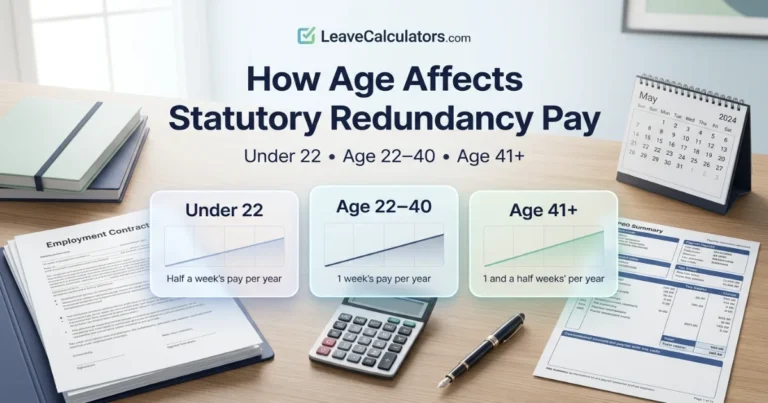
Notice Pay by Length of Service
Notice pay by length of service depends mainly on how long you have worked continuously for your employer and whether your contract gives you more than the statutory minimum. This guide explains UK statutory notice from one week up to 12 weeks, how notice pay is calculated and what happens if PILON or employer insolvency applies.
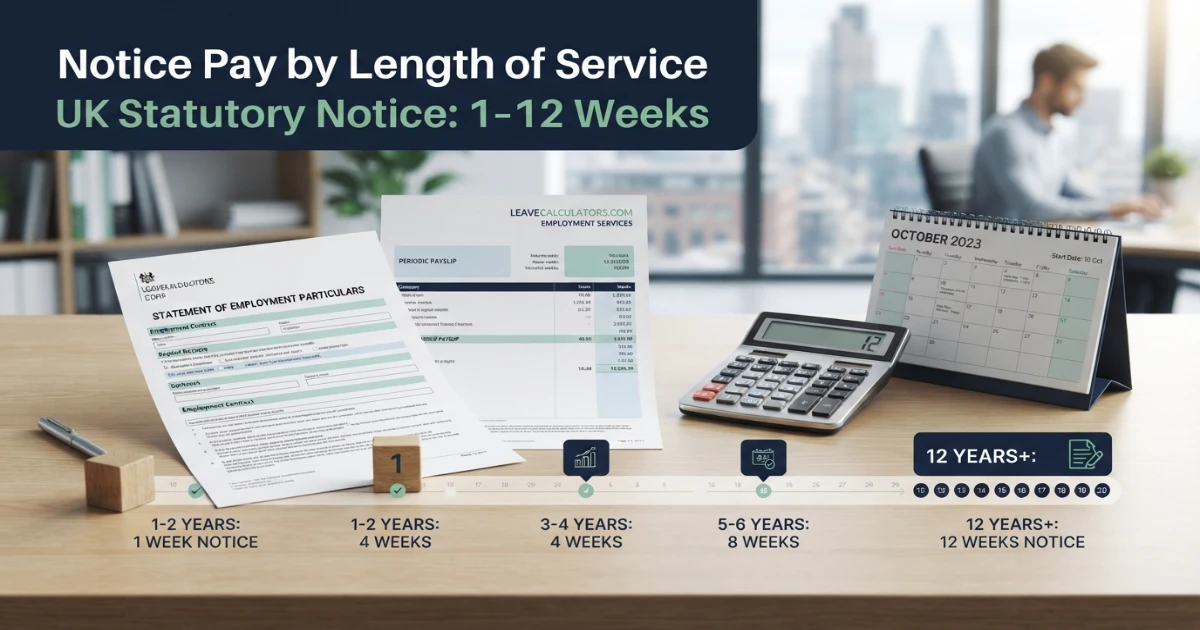
Notice Pay by Length of Service Table
| Continuous Service | Statutory Notice |
|---|---|
| Less than 1 month | No general statutory minimum notice under this rule |
| 1 month to less than 2 years | At least 1 week |
| 2 complete years | 2 weeks |
| 3 complete years | 3 weeks |
| 4 complete years | 4 weeks |
| 5 complete years | 5 weeks |
| 6 complete years | 6 weeks |
| 7 complete years | 7 weeks |
| 8 complete years | 8 weeks |
| 9 complete years | 9 weeks |
| 10 complete years | 10 weeks |
| 11 complete years | 11 weeks |
| 12 years or more | 12 weeks maximum statutory notice |
How Notice Pay by Length of Service Works
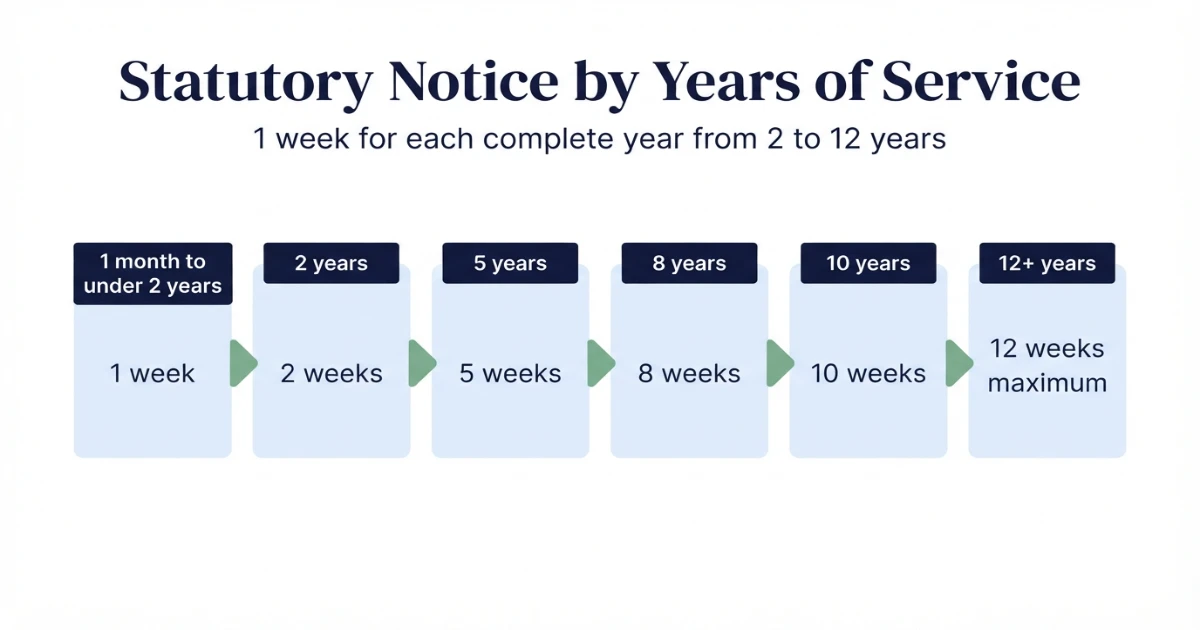
The statutory notice period is based on complete years of continuous employment.
Once you have worked for at least one month, you normally have at least one week’s statutory notice.
After two complete years, the notice period increases by one week for every complete year until the statutory maximum of 12 weeks is reached.
Example: If you have worked for an employer for 7 years and 8 months, your statutory notice period is normally 7 weeks because only complete years count for the one-week-per-year rule.
Notice Pay With 1 Year of Service
An employee who has worked continuously for 1 year is normally entitled to at least:
If their contract gives 4 weeks, the longer contractual notice period can apply instead.
Notice Pay With 2 Years of Service
At two complete years, statutory notice becomes:
This is also the point at which an eligible employee may normally start qualifying for statutory redundancy pay if the other redundancy conditions are met.
Notice Pay With 5 Years of Service
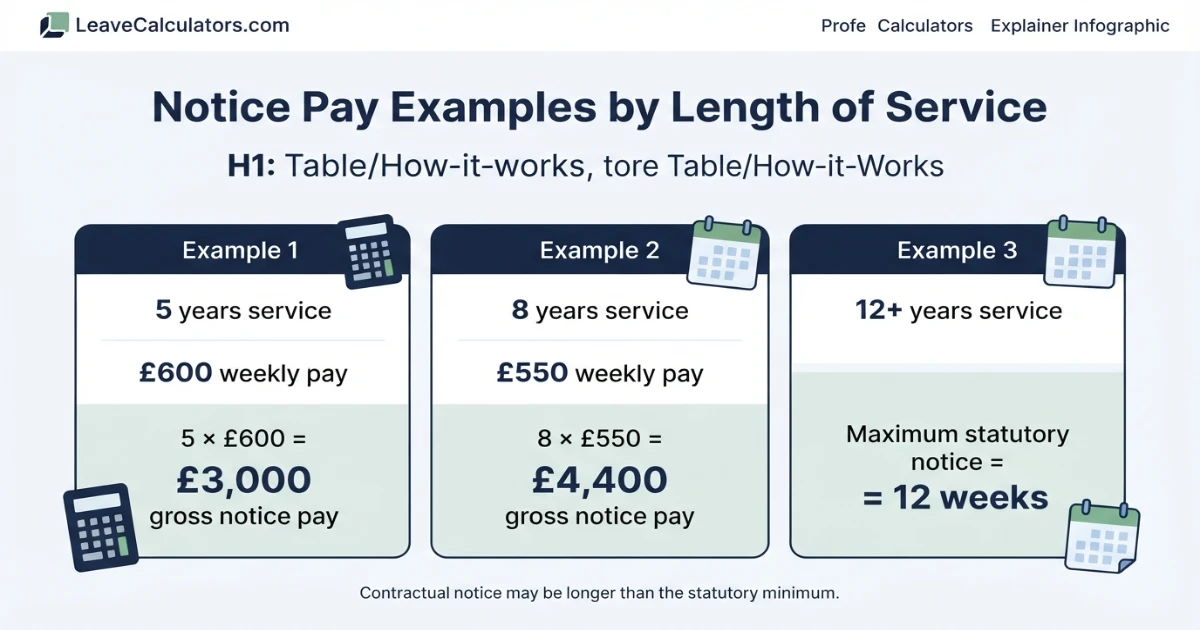
An employee with 5 complete years of continuous service is normally entitled to:
If they earn £600 per week and work the full notice period, that could mean:
This is an illustrative example before tax and National Insurance.
Notice Pay With 10 Years of Service
An employee with 10 complete years normally receives:
Again, a contract can provide more.
Notice Pay With 12 Years or More
Once an employee reaches 12 years of continuous service, statutory notice stops increasing.
An employee with 15, 20 or 25 years of service still has a statutory minimum of 12 weeks, unless their contract gives them more.
What If Your Contract Gives More Notice?
The statutory notice period is only the legal minimum.
Your contract, written statement or staff policy can provide a longer notice period.
For example:
- statutory notice based on service: 6 weeks;
- contractual notice: 3 months.
In that situation, the longer contractual period may apply.
An employer cannot normally use a contract to give less than the statutory minimum.
How Is Notice Pay Calculated?
Notice pay is linked to the notice period and the employee’s applicable pay.
GOV.UK says notice pay is generally based on average weekly earnings over the 12 weeks before the notice period starts.
The exact calculation can depend on whether the employee has:
- fixed pay and fixed hours;
- variable hours;
- regular overtime;
- commission;
- bonuses; or
- other contractual pay arrangements.
Worked Notice Pay Example
Assume an employee:
- has 8 complete years of service;
- earns £550 per week;
- has no longer contractual notice period.
Length of service: 8 years
Statutory notice: 8 weeks
Illustrative gross notice pay: £4,400
Do You Have to Work the Notice Period?
Usually, yes.
If you are made redundant and asked to work your notice, you remain employed until the final employment date and continue receiving normal notice pay.
However, the employer may use:
- PILON;
- garden leave;
- an agreed early-leaving arrangement; or
- another contractual option.
How PILON Works With Length of Service
PILON means payment in lieu of notice.
Instead of working the full notice period, employment ends earlier and the employee receives pay relating to the notice period.
For example, an employee with 9 years of service has 9 weeks’ statutory notice.
If PILON is used and weekly basic pay is £700:
The exact amount can depend on contract terms and benefits.
Can Notice Period Add Another Year to Redundancy Service?
Potentially, yes.
Acas explains that where statutory notice is paid in lieu, the redundancy-pay relevant date can include the statutory notice period that would have been worked.
This can create another complete qualifying year.
Actual service when employment ends: 8 years and 11 months
Statutory notice: 8 weeks
If PILON applies, those statutory notice weeks can push the relevant service beyond 9 complete years.
Is Notice Pay Separate From Redundancy Pay?
Yes.
Notice pay and statutory redundancy pay are separate entitlements.
An eligible employee may receive:
- pay while working notice or PILON;
- statutory redundancy pay;
- enhanced redundancy pay;
- unused holiday pay; and
- final salary or other contractual amounts.
Read: Can You Get Redundancy Pay and Notice Pay Together?
Notice Pay With Less Than 2 Years of Service
An employee does not need two years of service to have statutory notice rights.
If you have worked for at least one month but less than two years, the statutory minimum notice is normally:
This is different from statutory redundancy pay, which normally requires at least two years of continuous employment.
Do Partial Years Count?
For service between two and 12 years, statutory notice is one week for each complete year.
So:
- 4 years 2 months = 4 weeks;
- 4 years 9 months = 4 weeks;
- 5 complete years = 5 weeks.
Your contract can still provide more than this.
What About Garden Leave?
Garden leave keeps the employee employed during the notice period but usually removes the requirement to attend work.
The employee normally continues to receive:
- salary;
- contractual benefits; and
- other normal employment rights during notice.
Garden leave is different from PILON because employment continues until the notice period expires.
Is Notice Pay Taxable?
Yes.
Notice pay, PILON and amounts treated as Post-Employment Notice Pay are generally employment earnings and are normally subject to Income Tax and National Insurance.
This is different from qualifying redundancy compensation, which can have different termination-payment tax treatment.
Notice Pay if Your Employer Is Insolvent
If the employer is formally insolvent and cannot pay the statutory notice owed, eligible employees may be able to claim statutory notice pay from the Insolvency Service.
The government calculates statutory notice at:
- one week for each complete year of employment;
- up to a maximum of 12 weeks.
For qualifying claims from 6 April 2026, the Insolvency Service weekly payment is capped at £751.
Insolvency Notice Pay Example
Suppose an employee has:
- 10 years of service;
- normal weekly pay of £900;
- no notice payment because the employer became insolvent.
Statutory notice entitlement:
For a qualifying 2026 government claim, the weekly amount is capped at £751:
The final Insolvency Service payment can be affected by earnings or benefits during the notice period.
What If Your Employer Gives Too Little Notice?
If you believe you have not been given the correct notice period:
- check your exact continuous service dates;
- compare them with the statutory notice table;
- read your contract for any longer entitlement;
- raise the discrepancy with your employer in writing; and
- keep copies of all correspondence.
Acas says an employee may potentially have a wrongful-dismissal claim if the correct notice is not provided and the issue cannot otherwise be resolved.
Notice Pay by Length of Service Checklist
- Confirm your continuous employment start date.
- Confirm your final employment date.
- Count complete years of service.
- Use the statutory notice table.
- Check your contract for longer notice.
- Confirm whether you will work notice or receive PILON.
- Check your weekly-pay calculation.
- Check tax and National Insurance deductions.
- Keep redundancy pay separate from notice pay.
- If your employer is insolvent, check the Insolvency Service notice-pay route.
Check Your Redundancy Pay Separately
Notice pay depends on length of service, while statutory redundancy pay also depends on age and weekly pay. Calculate your redundancy entitlement separately.
Use the UK Redundancy Pay CalculatorFrequently Asked Questions
How much notice do I get after 1 year of service?
The statutory minimum is normally 1 week, unless your employment contract provides a longer notice period.
How much notice do I get after 5 years?
An employee with 5 complete years of continuous service is normally entitled to at least 5 weeks’ statutory notice.
How much notice do I get after 10 years?
The statutory minimum is normally 10 weeks.
How much notice do I get after 15 years?
Statutory notice is capped at 12 weeks once an employee has 12 or more years of continuous service. A contract can provide more.
Do partial years count for statutory notice?
For employees with 2 to 12 years of service, statutory notice is based on complete years. For example, 4 years and 9 months normally gives 4 weeks’ statutory notice.
Can my contract give me more notice?
Yes. Contractual notice can be longer than the statutory minimum but normally cannot be shorter.
Is notice pay the same as redundancy pay?
No. Notice pay and redundancy pay are separate entitlements and are calculated under different rules.
Is PILON based on length of service?
The notice period being replaced by PILON is generally determined by the employee’s statutory or contractual notice entitlement, which can depend on length of service.
What is the maximum statutory notice period?
The maximum statutory notice period is 12 weeks for an employee with at least 12 years of continuous service.
Final Answer: Notice Pay by Length of Service
Notice pay by length of service follows a simple statutory scale in the UK.
If you have worked for at least one month but less than two years, the minimum statutory notice is normally 1 week.
Between 2 and 12 years, you normally receive 1 week’s notice for each complete year of service.
At 12 years or more, statutory notice reaches its maximum of 12 weeks.
Your contract can give you more than these statutory minimums, but normally not less.
Notice pay is generally linked to the applicable notice period and average weekly earnings. It is separate from redundancy pay and is normally taxable as employment earnings.
If PILON is used, the statutory notice period can sometimes also affect the relevant date used to calculate qualifying redundancy service.